mawiiyahk nakatikashoo
Embracing our 2S+ Métis history, roles and medicines.
Connecting with kin & community. No one left behind.
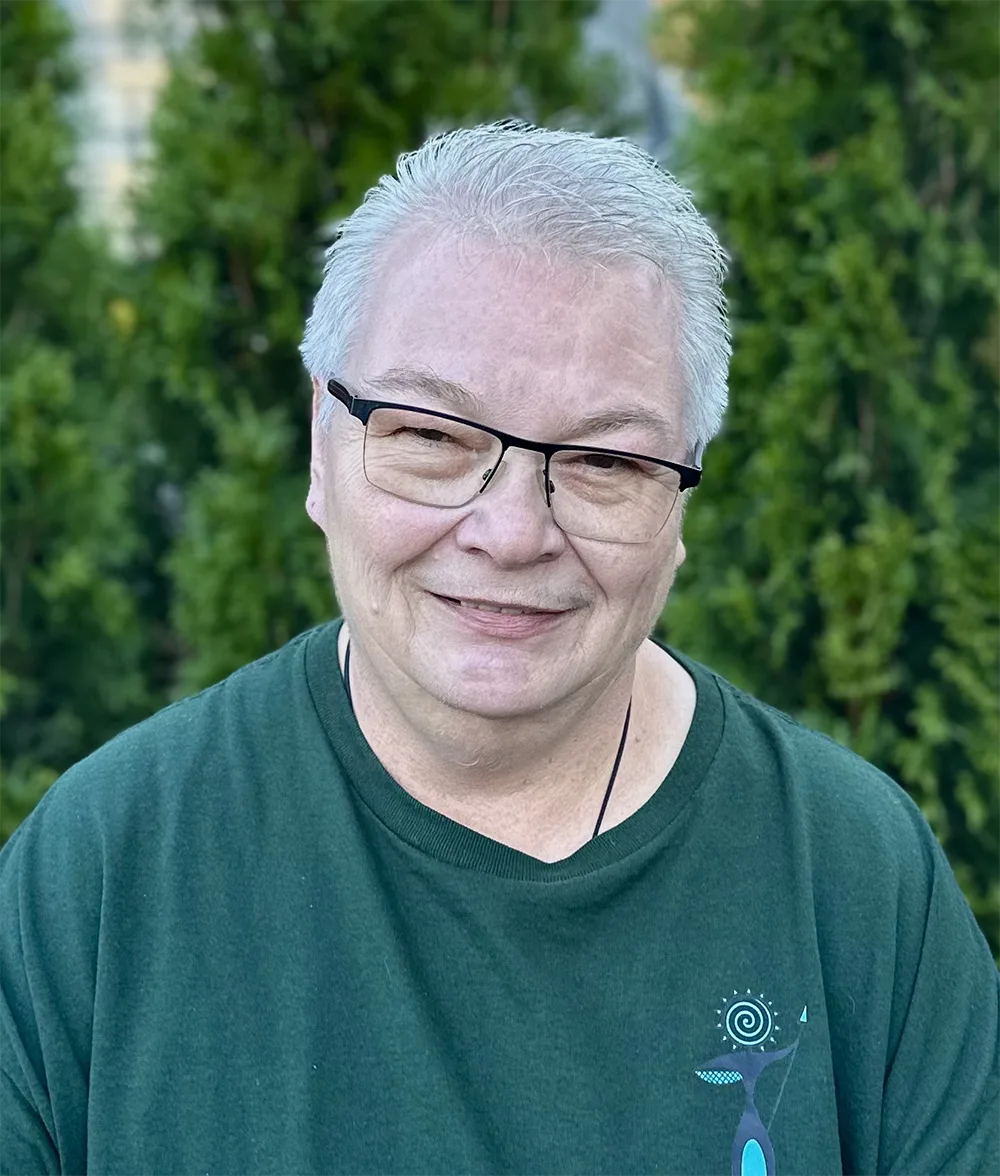
The committee means so much to me. Although I have amazing family and friends that accept me as 2SLGBTQQIA+ . I find I’m not totally myself. I hold things back for fear of offending them. They don’t totally understand who we are, which I don’t blame them for; they do try. With the committee I feel safe; I feel like I came home to a bunch of amazing people who understand me without judgement. I’m learning so much about myself through talks and ceremonies. Kokum Charlotte and Kokum Barbara, with their guidance, are so comforting. Teaching the ones who have never done ceremonies before with gentleness and knowledge reassures me that I’m in the right place. Love you all from the bottom of my heart.
Sheila Andrews
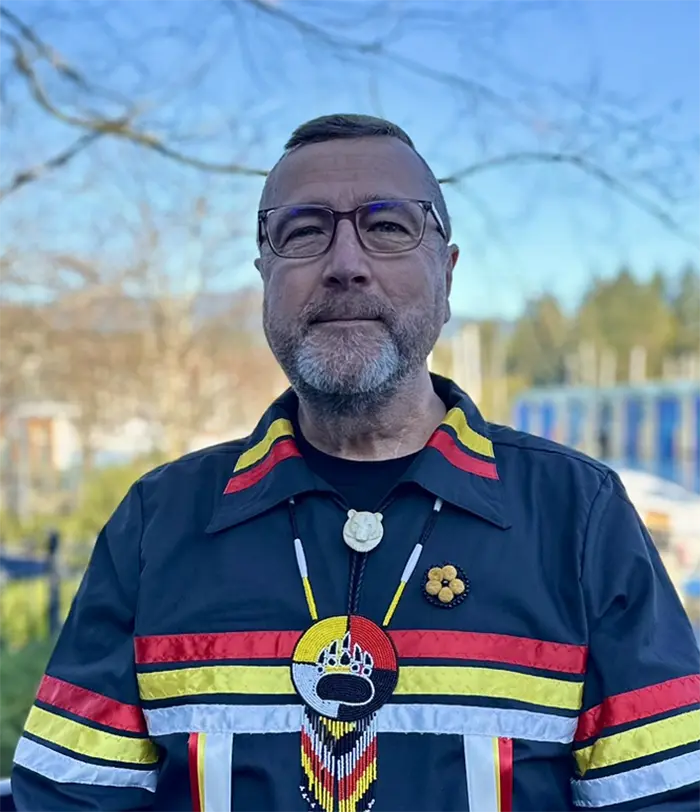
To me, Mawiiyahk Nakatikashoo (no one left behind) has shown me there is a place to safely come into circle with my Métis 2SLGBTQQIA+ kin from right across the homeland. Coming together in culture and ceremony has brought healing, allowing me to experience complete and total love plus acceptance of who I am for the first time in my life. It’s also lead me to reclaim our ancestral place as healers and medicine people within our nation. My fervent prayer is to seek guidance and wisdom from my Elders, Ancestors and Kise-Manitou Creator to help all of my Métis 2SLGBTQQIA+ kin experience the same love, healing, community and culture, plus deep connection to the lands and waters of Turtle Island I have come to know.
Rob Anderson
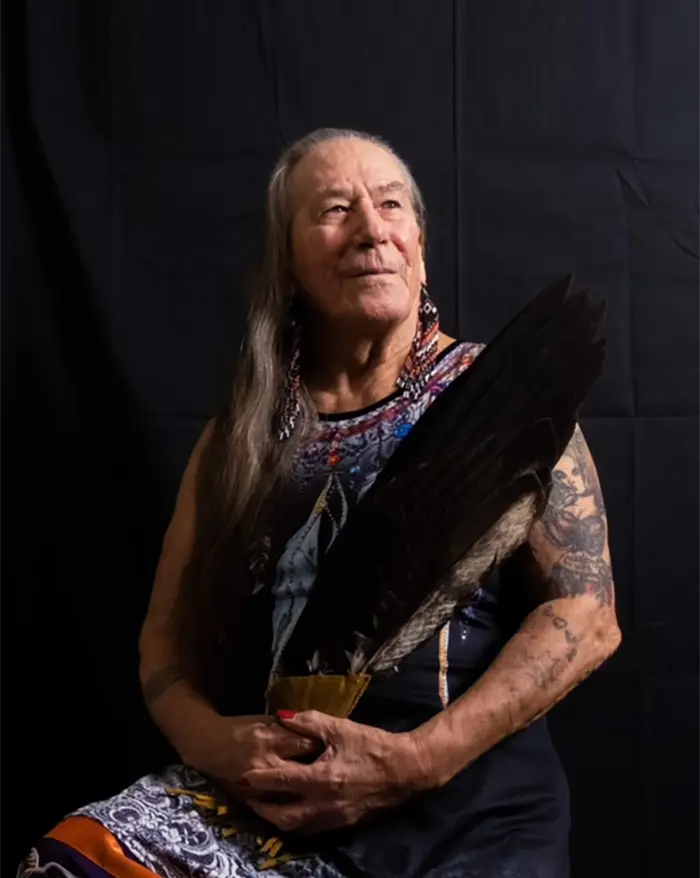
Living as Kise Manito intended us to.
Kookum Charlotte Nolin
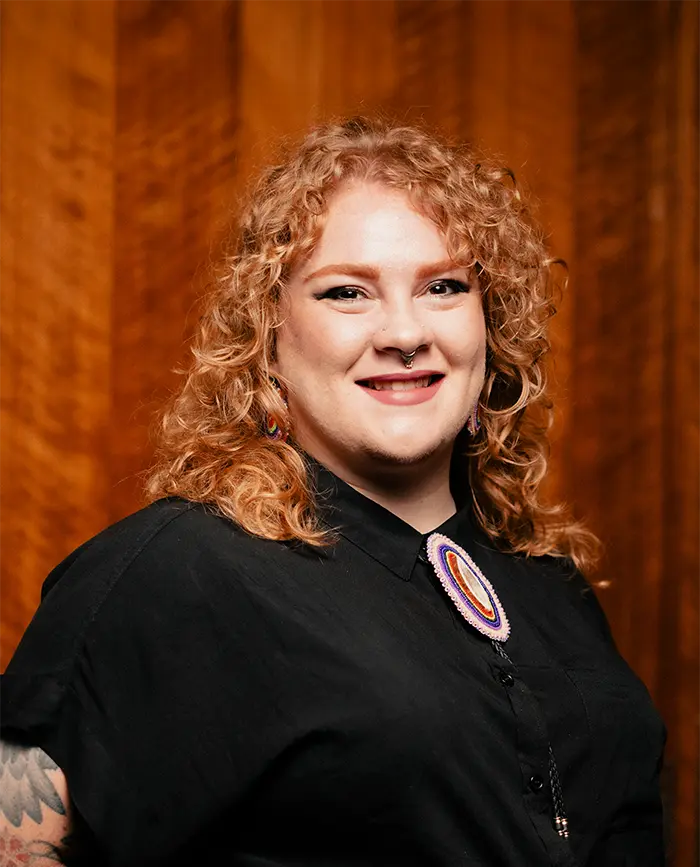
Coming in means there is a place for you in our circle. No one left behind means you never were truly alone, the ancestors saw you for who you truly are, we prayed for you, and you will always be held by our culture, community, lands, waters, ancestors, and kise manitou
Lydia Toorenburgh
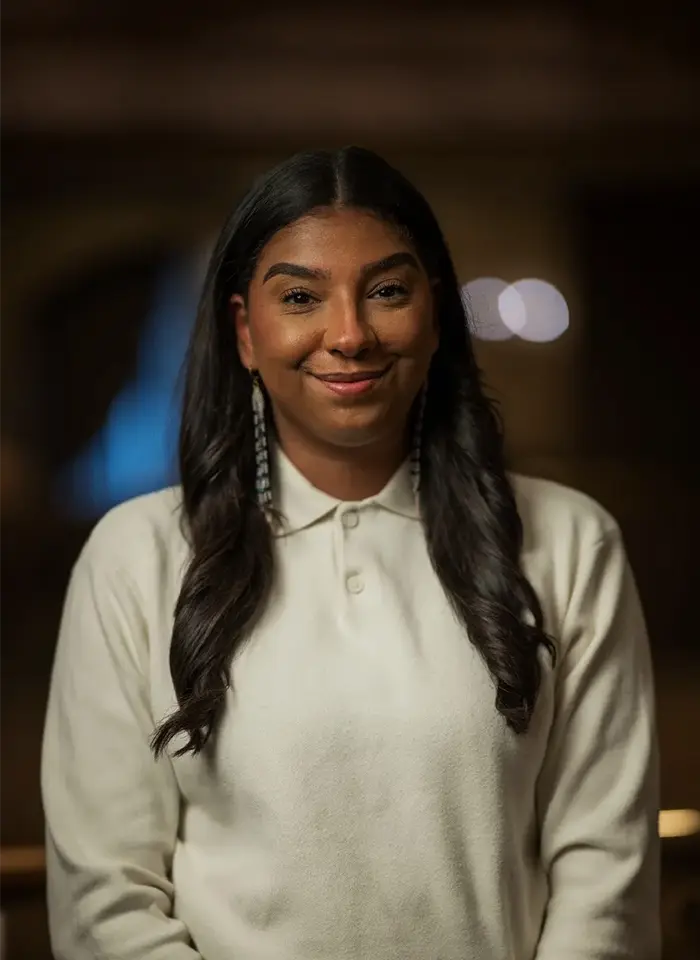
Being part of this group has been one of the most meaningful experiences of my life. I feel fully seen, not just as someone who carries the strength and beauty of Métis culture, or as a 2 spirit person but also as someone who is Afro Indigenous. That part of my identity is often overlooked or misunderstood, but here it’s embraced with respect and love. This group has given me a space where I don’t have to explain or defend who I am. I can just be in community, in culture, in ceremony.
Angelina Lamy
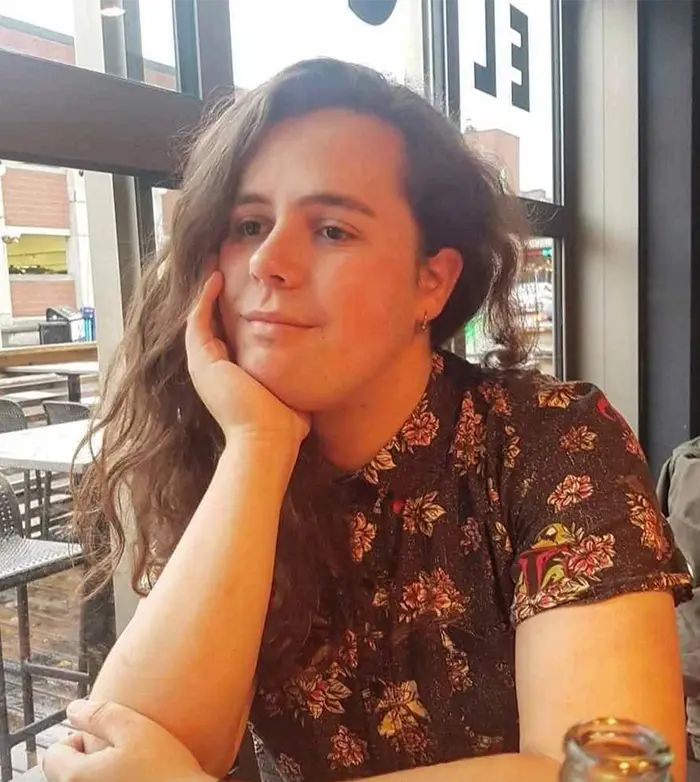
I can’t understate how much this committee has done to reconnect me with my own community. It’s one thing to be active within your own local community, but to engage with, work with, and get to build a National community with other 2SLGBTQIA+ Métis persons from across the province is another thing. It’s an affirmation that I’m not alone in my identity, and that I have a right to be who I am.
Our work in this committee is incredibly important to me, as I’m not the first Two-Spirit person in my Family and I most certainly won’t be the last. This committee has given me so many opportunities to reconnect with my community and confidence in who I am; I want to make sure that any two-spirit kin who follow me have this same chance.
Jay Crawford

Mawiiyahk Nakatikashoo to me is a radical act of decolonization; as Two Spirit people we’re reclaiming our traditional roles within our Communities. We’re coming together, sharing Connections. We’re learning our strength by learning and relearning our Culture. And, in Ceremony we’re (re)discovering WE are Medicine. We take care of our Kin, as in the Wolf’s strength is in the pack, the strength of the pack is in the Wolf. No one left behind.
Topher Burke
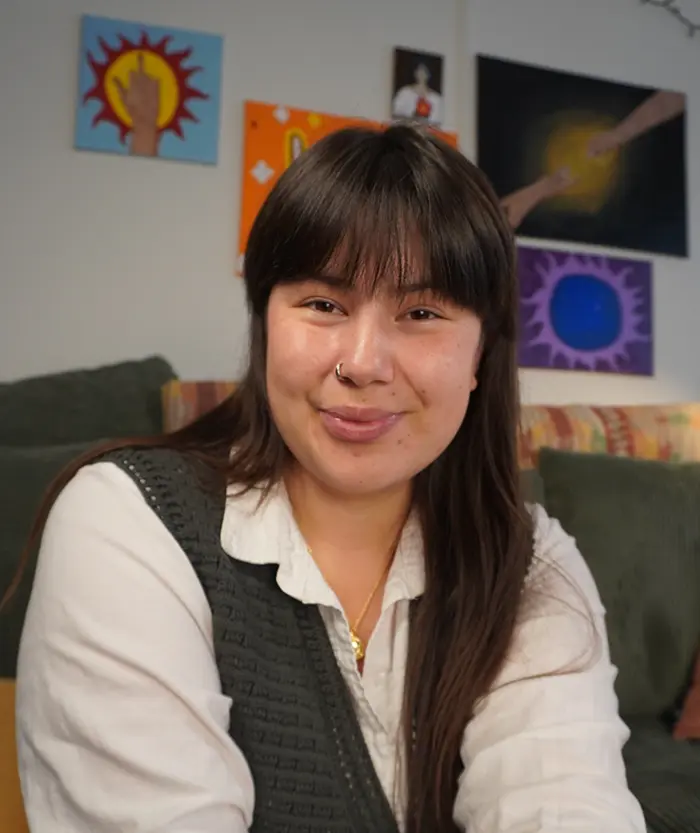
mawiiyahk nakatikashoo has been a breath of fresh air in my life as a Métis-Cree, Two-Spirit person. Not only have I been allowed to grow and learn what it means to be Two-Spirit, but I have even learned how to define the term for myself with the support of the committee around me. Even the word ‘committee’ doesn’t sound right since all I feel when I sit at the table with my kin is community. Coming together with mawiiyahk nakatikashoo has allowed me to take up space in order to carve out a place for Two-Spirit Métis across so-called Canada. I am very grateful — kinanâskomitin.
Britney Supernault
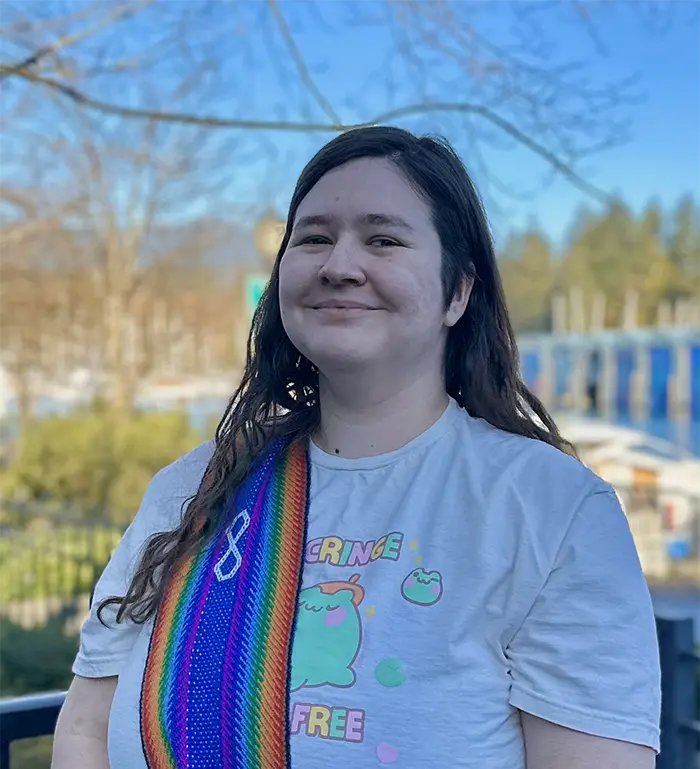
It’s so important to find a space where you can be, and nurture your true self. I have found that in a lot of spaces that are Métis or 2SLGBTQQIA+ you are allowed to be only part of your identity, as other spaces can be not as fully accepting of who you are. The Kokums have welcomed me into a community that allows us to be whole, and I hope to give our people to feeling this as well.
Paige Bellerive
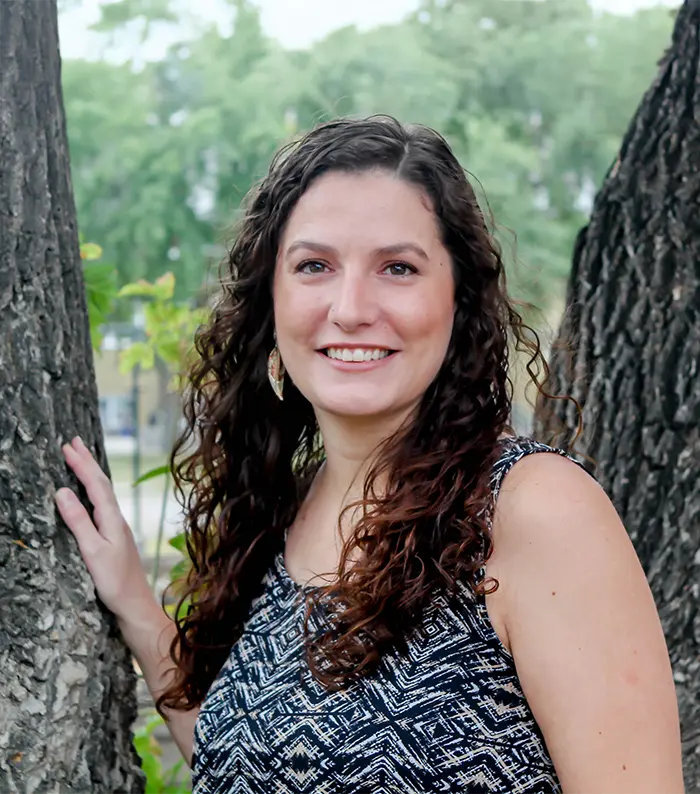
Being a part of this team truly is a gift. I’ve gotten to meet and make friends with amazing people from across our homeland. I’ve learned more about myself and the beautiful diversity that exists among two-spirit Métis. Mawiiyahk Nakatikashoo means we all have a voice at the table. We come together to celebrate community and culture through ceremony and connection. Our work builds bridges between our unique and shared identities, establishing a network of kin and queerness across the land and rivers that connect us.
Nicki Ferland

Our Offerings
Our work uplifts and supports the Two-Spirit Métis community through meaningful projects. We are guided by our strategic plan.

Our Shared Language
With the breadth of experience and language within our community, we wanted to share some language and topics that might help guide you through this site:
Two (2)-Spirit
The term Two-Spirit was created by and for Indigenous people. It was introduced in 1990 at the Third Annual Intertribal Native American/First Nations Gay and Lesbian American Conference held in Winnipeg, Manitoba in 1990. A circle of Elders discussed the term at length and accepted it in ceremony as a term for Indigenous LGBTQQIA+ people to use. Two-Spirit has been used in different contexts and can have a number of meanings. In some cases, Two-Spirit is used as an umbrella term by Indigenous people who also identify with another gender identity (gay, lesbian, bisexual, transgender, etc.) and in other cases, it is used to resist the English terminology.
The term is also often used to refer to the specific cultural and community roles that Two-Spirit people play as individuals who are understood in many Indigenous traditions to embody both male and female energies. Two-Spirit is an English term that is sometimes used in lieu of or in addition to other terms used in Indigenous languages. The vast majority of Indigenous languages spoken in North America have specific terms which refer to people do not identify within a male/female gender binary. For example, in nehiyawewin (the Cree language) there are many terms for different gender identities and sexual orientations and an umbrella term for 2SLGBTQQIA+ people is “tastawiyiniwak” which roughly translates to “in-between people.” Two-Spirit is a term that is gifted to any Indigenous LGBTQQIA+ people to use as they see fit to describe themselves.
2SLGBTQQIA+
This acronym is used to refer to a diverse range of sexual orientations and gender identities, including Two-Spirit, Lesbian, Gay, Bisexual, Transgender, Queer, Questioning, Intersex, and Asexual. There are many gender and sexual identities and new terms are continually being developed and edited. The “+” acts as an acknowledgement of the vast diversity of ways that people describe and express their identities that exist beyond the binary cisgender and heterosexual boundaries.
Indigiqueer
Indigiqueer is a term that many 2SLGBTQQIA+ Indigenous people use to describe their combined cultural, sexual, and gender identities. It was first articulated by Plains Cree trans man, filmmaker, artist, writer, and curator, Theo (AKA TJ) Cuthand, who created the term for the title of the Indigenous Two-Spirit Program at the 2004 Vancouver Queer Film Festival. Indigiqueer is sometimes used instead of or in addition to Two-Spirit and other terms under the 2SLGBTQQIA+ umbrella.
Advocacy
The act of supporting a particular cause or group of people and working to bring about social or political change on their behalf.
Gender and Orientation Based Violence
Gender and Orientation-Based Violence is violence that is perpetrated against an individual or group because of their actual or perceived gender identity, gender expression, sexual orientation, and/or romantic orientation. Our research group has added “orientation” to the common concept of “gender based violence” to recognize that 2SLGBTQQIA+ people can be persecuted because of their gender but also because of their sexual and/or romantic orientation.
This violence is created, enforced, and maintained by settler colonialism which has systematically destroyed, suppressed, and erased Indigenous 2SLGBTQQIA+ stories, teachings, roles, and cultures of acceptance. Such violence is primarily perpetrated by cisgender and heterosexual people, both Indigenous and non-Indigenous, but 2SLGBTQQIA+ people can also perpetrate lateral violence against one another, particularly transphobia and biphobia. It is all of our responsibilities to address Gender and Orientation-Based Violence.
We are examining the experiences of Two-Spirit and Indigiqueer Métis people when it comes to gender and orientation based violence. Métis Two-Spirit and Indigiqueer Gender and Orientation Based Violence refers to forms of violence caused by transphobia, homophobia and biphobia, and other irrational fears, aversions, discriminatory beliefs, and hatred rooted in the settler colonial gender binary. Many relatives in the Métis Nation, both past and present, follow Christianity. It is important to identify how the church has negatively impacted the acceptance of our 2SLGBTQQIA+ relatives in our Nation in addition to missionary, residential, and day schools. We also recognize that some cisgender and heterosexual Indigenous people weaponize concepts of tradition and culture to justify the discrimination, control, and exclusion of 2SLGBTQQIA+ relatives, particularly in ceremonial spaces where rigid gender roles are enforced. We call on all our relatives to uphold a culture of inclusion, acceptance, and the teachings of wahkotowin.
It is important to discern between genuine acts of violence or hatred and moments of discomfort or disagreement. Métis Two-Spirit and Indigiqueer Gender and Orientation Based Violence has direct and devastating impacts on our community, including increased rates of suicide, self-harm, and addiction. Two-Spirit and Indigiqueer Métis people, particularly transgender and gender queer relatives, also experience unacceptable rates of medical violence when accessing care. This violence also impacts transgender and gender queer peoples’ ability to travel freely, and advance their employment and professional opportunities. Transgender and gender queer relatives are required to sacrifice opportunities and access to spaces for their own safety and the safety of their families.
Métis Nation Homeland
The Historic Métis Nation Homeland encompasses the three Prairie Provinces (Manitoba, Saskatchewan, Alberta), as well as parts of Ontario, British Columbia, the Northwest Territories and the Northern United States.
Join our Community
First Annual Community Gathering
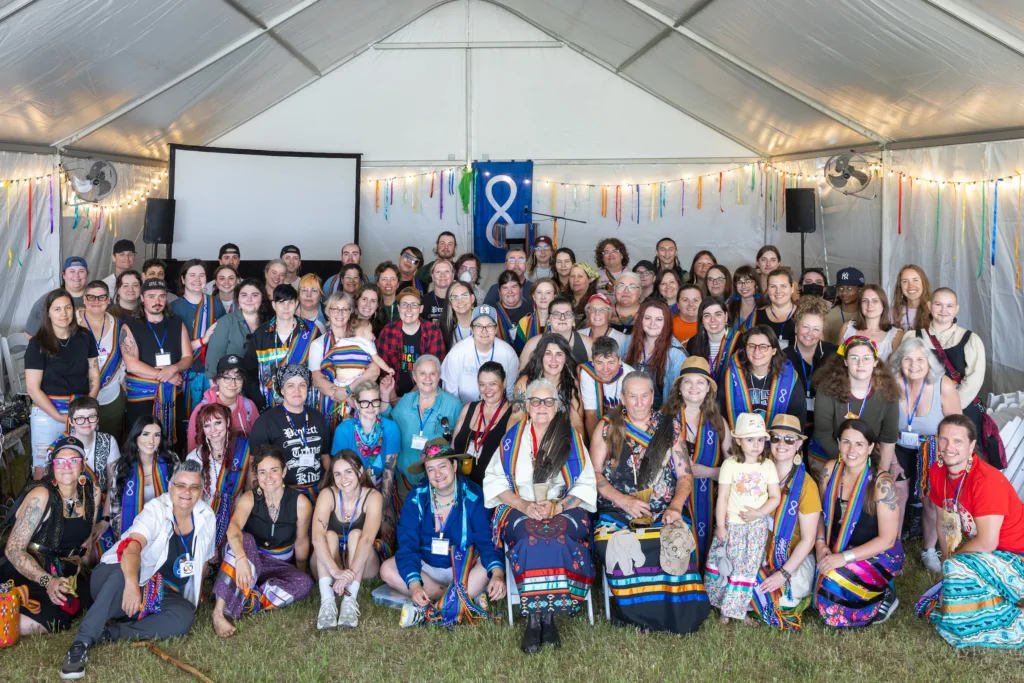
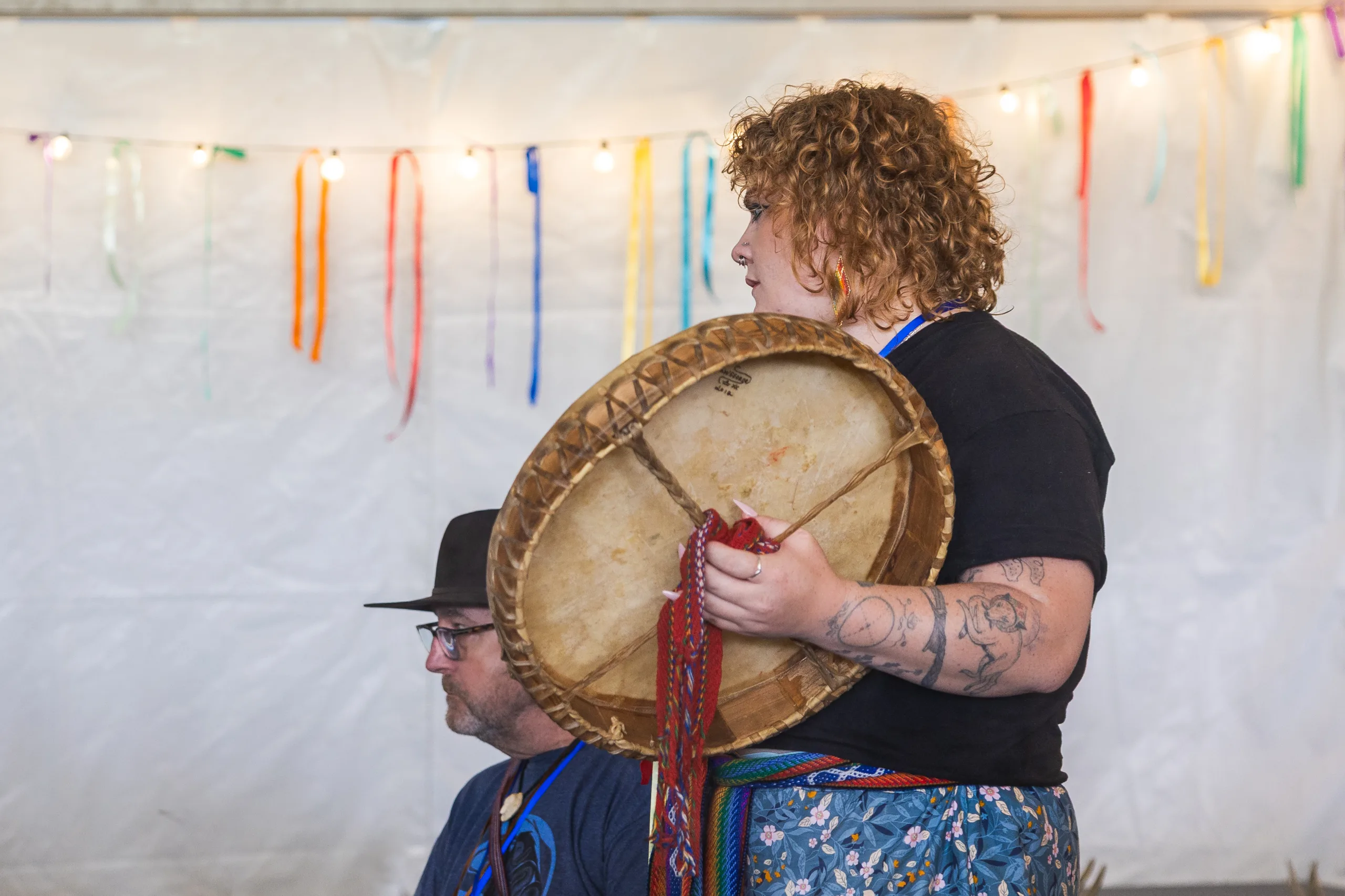
We hosted a land-based National Gathering in June 2025 for Métis 2SLGBTQQIA+ Kin rooted in Ceremony, Culture, Community and Connection. It was a mix of doing important work and taking time to heal, while also making space for laughter, joy and connection. A big part of the gathering was focused on shaping and sharing ideas for a National Action Plan to address gender and orientation-based violence against 2SLGBTQQIA+ Métis people. Everyone who attended had the opportunity to contribute their thoughts on what needed to be included. Kischii maarsii to all those who supported and participated in this sacred and meaningful gathering with us.